
Brighten Up Your Tie Dye with Vinegar: A Step-by-Step Guide
Why Your Tie Dye Colors Fade — and How Vinegar Can Help
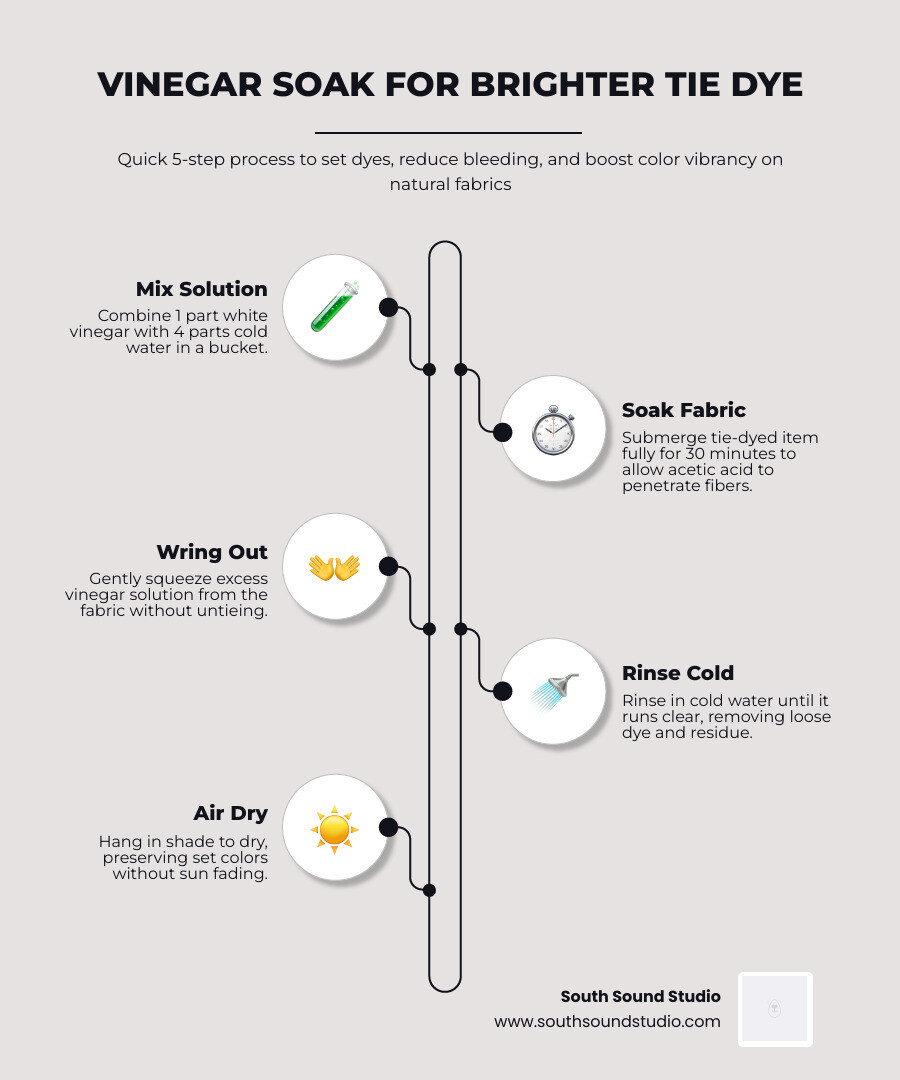
How to make tie dye brighter with vinegar is simpler than most people think. Here’s the quick answer:
- Mix 1 part white vinegar with 4 parts cold water in a bucket or sink.
- Soak your tie-dyed fabric for 30 minutes.
- Rinse in cold water until the water runs clear.
- Wash separately in cold water with a mild detergent.
- Air dry in the shade.
You put in the work. You tied, dyed, and waited — and the colors still came out duller than you hoped.
It’s one of the most common frustrations in DIY tie-dye. The good news? A simple pantry staple can make a real difference: white vinegar.
Vinegar’s natural acidity helps set dye into fabric, reduces color bleeding, and strips away mineral and soap residue that can make colors look flat. It works especially well with natural and plant-based dyes, which tend to be less vivid than synthetic dyes to begin with. For certain fabric types — particularly protein fibers like silk and wool — vinegar can act as a true fixative, helping the dye bond more permanently to the fiber.
That said, vinegar isn’t a magic fix for every situation. What type of dye you’re using matters a lot. We’ll break all of that down clearly in the sections below.
For now, here’s a quick visual overview of the vinegar-setting process:
Why Use Vinegar to Make Tie Dye Brighter?
When we talk about tie-dye in 2026, we are looking at a craft that spans thousands of years, from ancient Egyptian pleated garments to the Chinese shibori techniques. Throughout history, artisans have looked for ways to lock in those pigments. Vinegar remains a favorite because it is accessible, non-toxic, and scientifically effective for specific dyeing scenarios.
The primary reason vinegar helps is its acidity. Most household white vinegar contains about 5% to 8% acetic acid. This acidity acts as a catalyst for certain types of dyes, particularly acid dyes and natural plant-based pigments. It helps the dye molecules find a “home” in the fibers of your fabric and stay there.
Additionally, vinegar is a master at residue removal. Over time, laundry detergents and minerals in hard water can create a “film” on your clothes. This build-up acts like a dusty window over a beautiful view—it makes the colors underneath look muted. Vinegar dissolves this build-up, effectively “polishing” the fabric so the colors can shine through.
For a deeper dive into the mechanics of colorfastness, you can check out this How to Set Tie Dye: Guide to Keeping Dyes & Colors Vibrant resource.
How to make tie dye brighter with vinegar on natural fibers
At South Sound Studio, we are passionate about natural fibers. Whether you’re working with 100% cotton, silk, rayon, or wool, the fiber type dictates how the vinegar will interact with your dye.
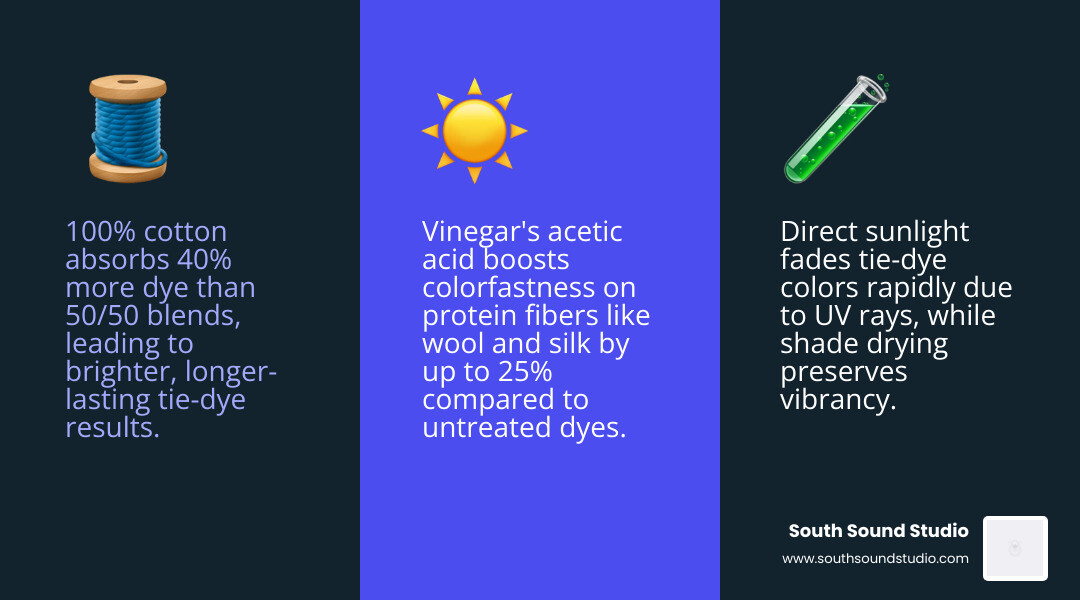
- Protein Fibers (Silk and Wool): These fibers love vinegar. In fact, if you are using acid dyes on wool or silk, vinegar isn’t just a “tip”—it’s a requirement. The acid creates a chemical bond between the dye and the animal protein.
- Cellulose Fibers (Cotton, Linen, Rayon): While vinegar isn’t the primary “fixative” for modern fiber-reactive dyes (like Procion MX) on cotton—that’s usually soda ash—it still plays a vital role. Using vinegar in the final stages of a cotton tie-dye project helps neutralize the high pH of the soda ash, which protects the fabric and helps the colors look crisp rather than muddy.
The science of vinegar as a dye fixative
The “magic” of vinegar lies in its ability to lower the pH level of the dye bath or the fabric itself. When the environment is more acidic, it changes the electrical charge of the fibers. For protein-based fabrics, this change allows the dye particles to latch onto the fiber more aggressively.
Think of it like a magnet. Without the vinegar, the “magnet” of the fabric is weak. Once you add that acetic acid, the magnetic pull becomes much stronger, drawing the dye in and holding it tight. This prevents “bleeding”—that annoying phenomenon where your beautiful purple splotches turn into a greyish smudge during the first wash.
When and How to Use the Vinegar Soak
Timing is everything in tie-dye. If you use vinegar at the wrong stage, you might actually hinder the dye’s ability to bond. Here is how we break down the timing for the best results.
Pre-treating natural dyes with vinegar
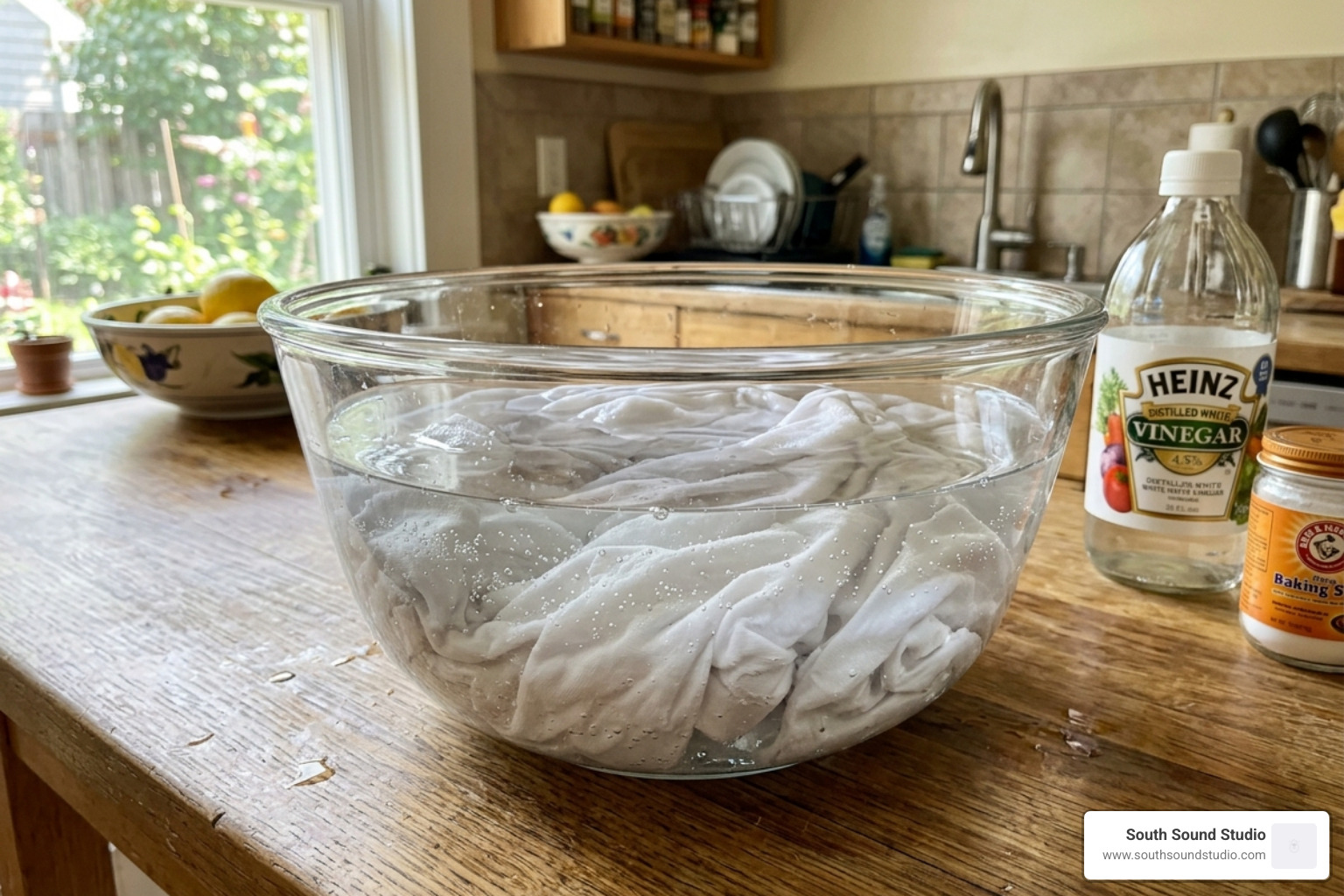
If you are following our signature South Sound Studio method of using natural, plant-based dyes (like turmeric, onion skins, or red cabbage), you should use vinegar before you even touch the dye. Natural dyes are notoriously fickle; they need a “mordant” or a pre-treatment to help them stick.
For plant-based dyes, we recommend a 1:4 ratio (one part vinegar to four parts water).
- Place your fabric in a large pot with the vinegar-water solution.
- Bring it to a slow simmer.
- Let it simmer for about one hour.
- Allow it to cool, then wring it out.
This process opens up the fibers and preps them to receive the natural pigments. For more tips on preventing washout at this early stage, see How to Keep Tie-Dye From Washing Out.
Post-dyeing: How to make tie dye brighter with vinegar
For most DIY crafters using store-bought kits or food coloring, the vinegar soak happens after the dye has had time to sit.
Once your dyed garment has “cured” (usually 8 to 24 hours in a plastic bag), it’s time for the vinegar bath. This is the “setting” stage. By submerging the tied or recently untied garment in a 1:1 or 1:2 vinegar-to-water solution, you are essentially “locking the door” behind the dye that has already entered the fabric.
Step-by-Step Guide: How to Make Tie Dye Brighter with Vinegar
Ready to get your hands dirty (or hopefully, keep them clean with some gloves)? Let’s walk through the process of how to make tie dye brighter with vinegar using our tested studio method.
Preparing the solution
First, choose your vinegar. We always recommend distilled white vinegar. It’s cheap, clear, and has a consistent acidity level. Avoid using apple cider vinegar or balsamic (unless you want your shirt to smell like a salad and turn a strange shade of brown!).
The Recipe:
- For standard setting: 1 cup of white vinegar per 1 gallon of cold water.
- For extra-vibrant “problem” dyes (like reds and pinks): Increase to a 1:1 ratio.
- The Salt Secret: If you are using berry-based dyes or food coloring, add 1/2 cup of common table salt to the mixture. Salt helps drive the dye into the fabric, while the vinegar sets it.
The soaking and rinsing process
- The Cure: Ensure your shirt has sat for at least 8-24 hours. Research shows that dye potency only lasts about 48-72 hours after being mixed with water, so don’t wait too long!
- The Submerge: Place your garment (still tied with rubber bands for the best color separation, or untied for a more blended look) into the bucket.
- The Wait: Let it soak for 30 to 60 minutes.
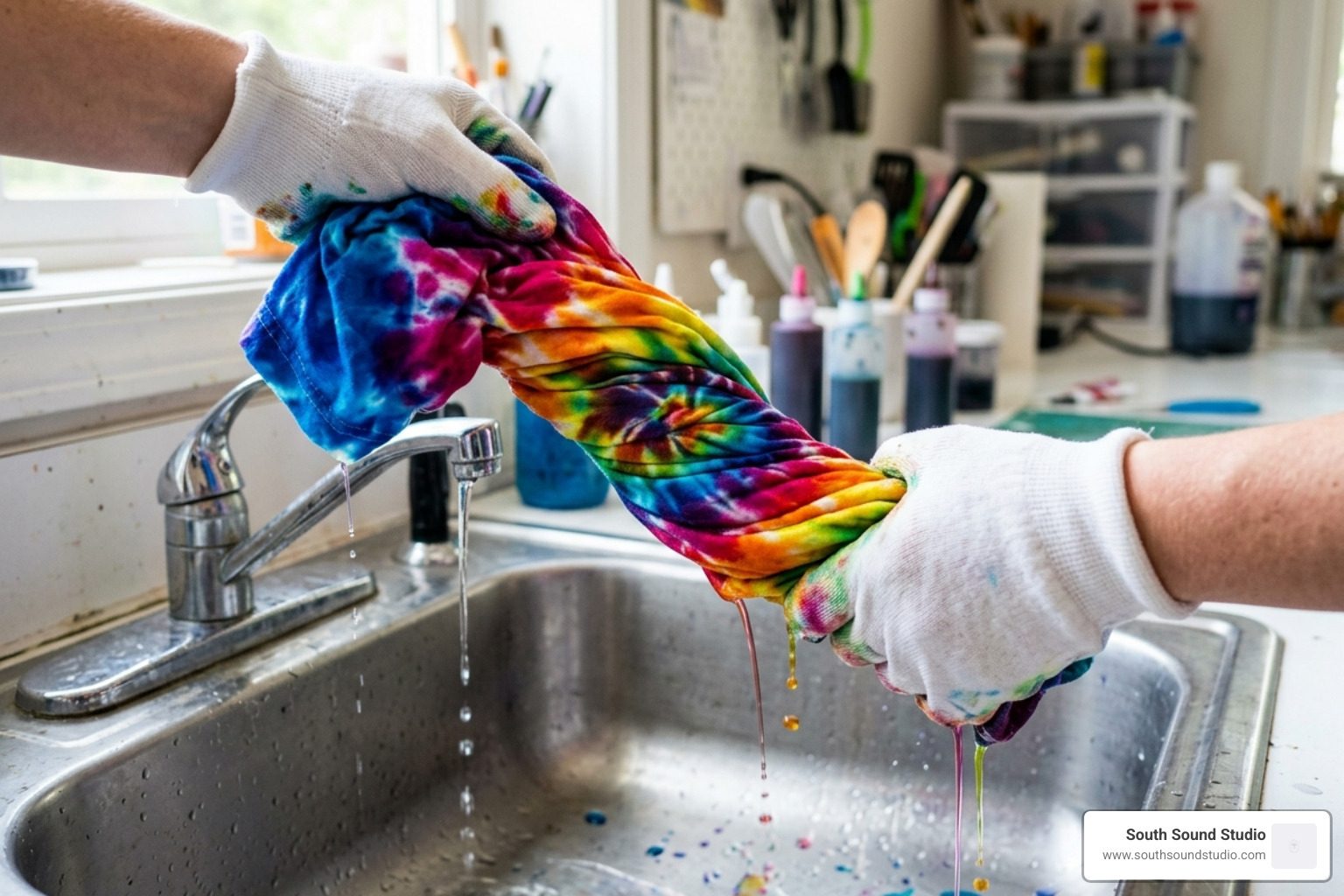
- The Wring: Remove the garment and wring it out thoroughly.
- The First Rinse: Rinse under cold running water. Do not use hot water yet! Hot water can cause the dye to leach out before it’s fully set.
- The Clear Water Transition: Keep rinsing until the water running off the fabric is clear or only very lightly tinted.
Best Practices for Long-Lasting Vibrancy
Your work doesn’t end when the shirt is dry. To keep those colors popping well into 2026 and beyond, you need a long-term care plan.
Common mistakes to avoid
Even the best vinegar soak can be undone by a few simple errors. We’ve seen these mistakes a thousand times, so learn from our “oops” moments:
- Using Hot Water Too Soon: Heat is a double-edged sword. While heat can speed up the “curing” of the dye while it’s in the plastic bag, using hot water during the first rinse will wash away the pigment you just tried to set. Always start with cold.
- Too Much Detergent: For the very first wash, use a tiny amount of mild, color-safe detergent. Avoid heavy-duty detergents with “Oxi” boosters or bleach alternatives for the first few cycles.
- The Synthetic Trap: Vinegar works wonders on cotton, silk, and wool. It does almost nothing for polyester, nylon, or spandex. If your shirt is a 50/50 blend, expect the colors to be about 50% as bright.
- Over-soaking: Don’t leave your shirt in vinegar for 24 hours. The acidity can eventually start to break down the fibers of the fabric, making it feel brittle or “crunchy.”
Maintaining brightness in 2026
Modern laundry habits have changed, but the basics of color care remain the same.
- Baking Soda: Add 1/2 cup of baking soda to your wash cycle. It helps maintain the brightness of the fabric and eliminates that lingering vinegar smell.
- Separate Washes: For at least the first three washes, wash your tie-dye alone or with other tie-dyed items.
- Turn it Inside Out: This reduces the friction on the dyed fibers, preventing that “fuzzy” look that makes colors seem faded.
- Air Dry in the Shade: This is the most important tip. UV rays from the sun are the enemy of dye. While letting a shirt sit in the sun while it’s in a plastic bag can help it cure, drying a finished shirt in direct sunlight will bleach the colors faster than you can say “retro.”
Frequently Asked Questions about Vinegar and Tie Dye
Is vinegar necessary for professional fiber-reactive dyes?
If you are using professional-grade dyes like Procion MX or high-quality Tulip One-Step kits, vinegar is not strictly necessary for the setting process. These dyes use a chemical bond facilitated by soda ash (sodium carbonate).
However, many pros still use a vinegar rinse as a final step. Why? Because it helps “neutralize” the fabric. Fiber-reactive dyeing leaves the fabric in a very “basic” or alkaline state. A quick splash of vinegar brings the pH back to neutral, making the fabric softer and ensuring that no excess dye “creeps” into the white areas of your design later on.
Can vinegar fix a faded or already-washed tie-dye shirt?
This is a tough one. If your shirt has already been through a hot dryer and has faded, a vinegar soak won’t magically bring the color back. Vinegar isn’t a pigment; it’s a sealer.
However, if the shirt looks dull because of mineral build-up or “graying” from hard water, a soak in 1 part vinegar to 2 parts water can strip away that film and make the existing colors look a bit more “vivid.” If the color is truly gone, your best bet is a “re-dye” project!
Does vinegar work with food coloring or berry dyes?
Yes! In fact, if you are tie-dyeing with food coloring (a great project for kids), vinegar is your best friend. Food coloring is essentially an acid dye. Without vinegar, food coloring will almost entirely wash out the first time it gets wet. By soaking the fabric in vinegar before and after applying food coloring, you can achieve surprisingly bright (though usually temporary) results.
Conclusion
Mastering the art of tie-dye is a journey of color, patience, and a little bit of kitchen chemistry. Learning how to make tie dye brighter with vinegar is a foundational skill that bridges the gap between a “craft project” and a “piece of wearable art.”
Whether you are experimenting with the ancient tradition of natural plant dyes or using a modern kit for a weekend party, that bottle of white vinegar in your pantry is the key to longevity. It protects your hard work, softens your fabric, and ensures that your creative expression stays as bold as the day you made it.
At South Sound Studio, we believe everyone has a “flowing artistry” within them. Our goal is to provide you with the techniques and tips needed to make your DIY projects successful and sustainable. Don’t let your colors wash down the drain—lock them in and let them shine!
Ready to take your skills to the next level? From advanced folding patterns to the secrets of indigo vats, we’re here to help you grow. Explore our tie-dye tutorials and workshops and join our community of creators today!
